Sky Dragon Expeditions

Cultural journey · The full length of Bhutan

The Eastern Road

Fourteen days from Paro to Trashigang and back out by air — Bumthang, the Thrumshing La, the weaving villages of Khoma, and a part of the country that sees very few visitors.

Duration14 days, 13 nightsParo in, Yonphula or Guwahati out
RouteParo · Bumthang · Mongar · Lhuentse · TrashigangWest to east
WalkingEasyVillage walks only
Altitude1,100 – 3,780 mHighest point: Thrumshing La
GroupPrivate departureFrom two travellers, any date
Overview

About this journey

This is the long one. It crosses Bhutan end to end, over the Thrumshing La at 3,780 metres — the highest road pass in the country — into dzongkhags where a foreign face is still unusual and the weaving is the finest in the Himalaya.

The itinerary below is what we would run as written. Every day of it is adjustable — add a night, drop a drive, change a valley. Read when to travel if you are still choosing dates, and entry and fees for what a quotation covers.

Who this suits

Travellers who have seen western Bhutan, or who would rather cover ground than linger. There is a lot of driving and the hotels east of Bumthang are simple. In exchange you get a country almost nobody photographs.

Enquire about this journey

Private departure, any date. We reply with a written itinerary and a full quotation.

Duration14 days · 13 nights
StyleCultural
RegionParo to Trashigang
WalkingEasy
Altitude1,100–3,780 m
Quotation includesSDF & visa fee
Send Inquiry or call +975 77682156
The route

Where you sleep, and for how long

Paro1 nightPunakha2 nightsTrongsa1 nightBumthang2 nightsMongar2 nightsTrashigang3 nightsParo2 nights

Overnight stops in order. Read more about each valley on the valleys page.

Day by day

The itinerary

Driving times are realistic for Bhutanese mountain roads. Everything here is adjustable.

Day01
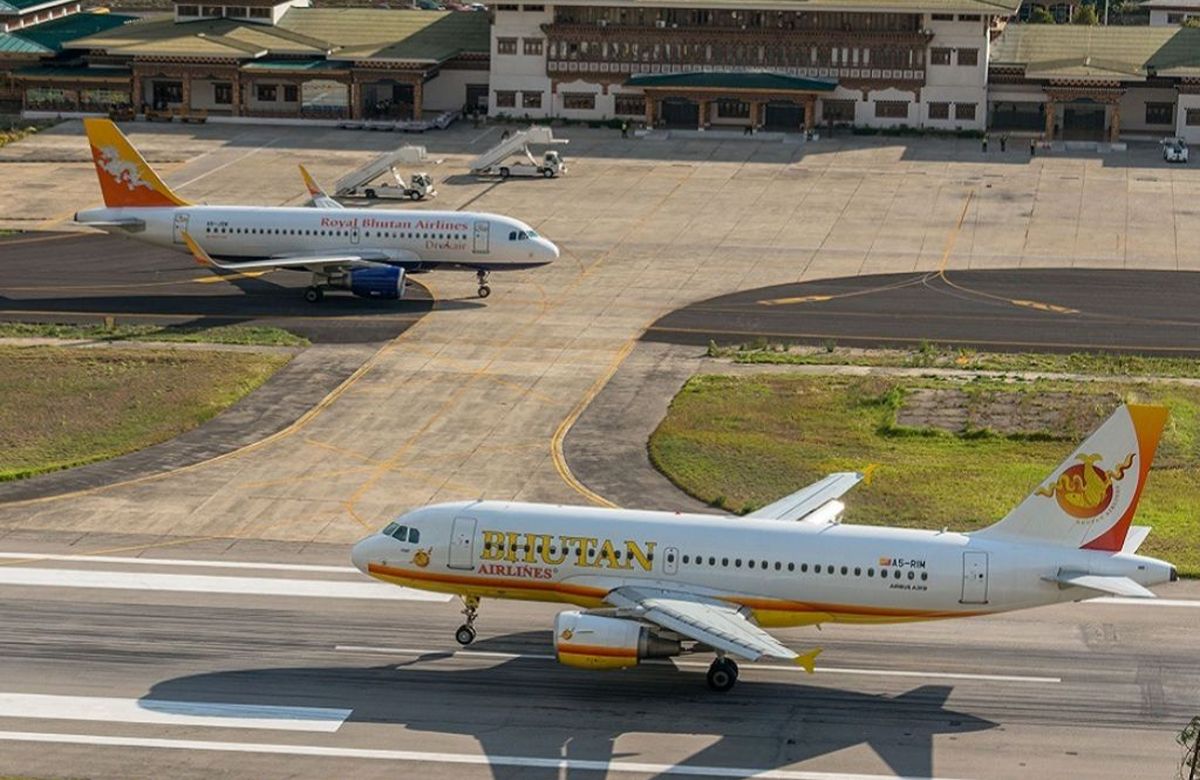
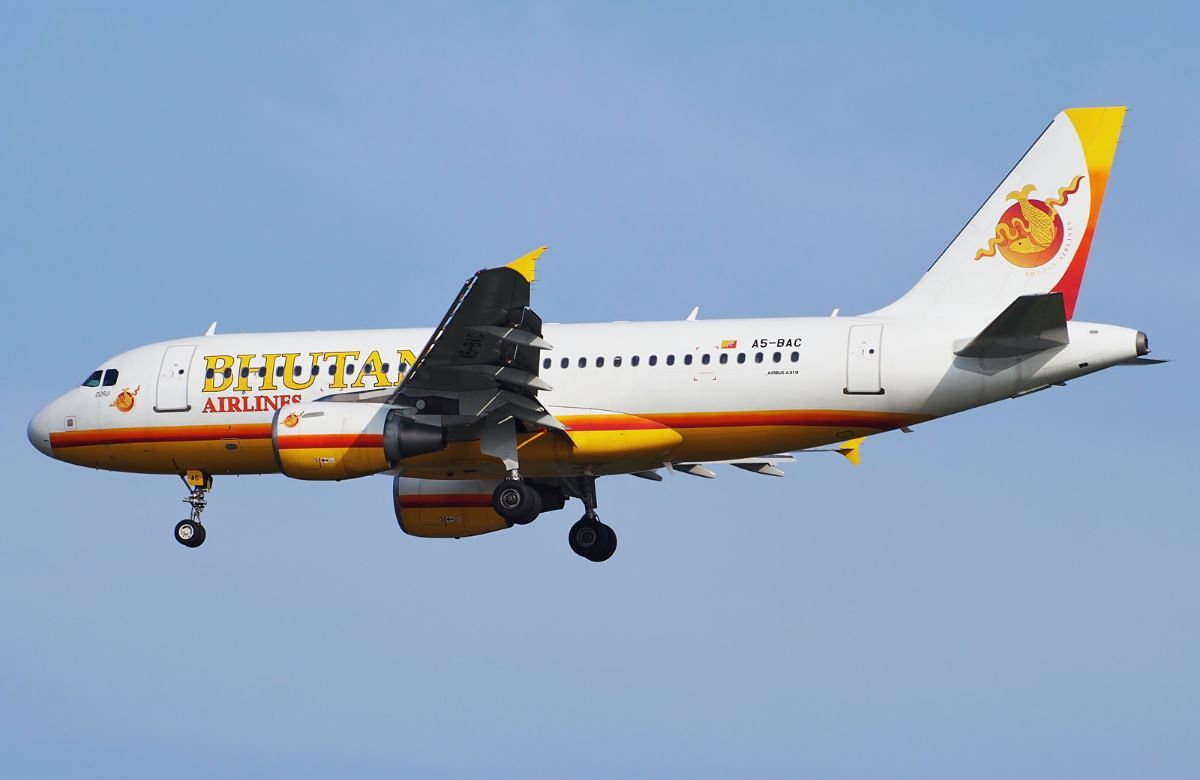
An aircraft on the apron at Paro International Airport

Arrive at Paro

Arrival day Paro

Arrival, and a deliberately quiet afternoon. There is a great deal of road ahead and nothing is gained by starting tired.

If the flight is early, Kyichu Lhakhang and a walk by the river.

Driving: 15 minutes from the airport Walking: Optional short walk Overnight: Paro (2,200 m)
Day02
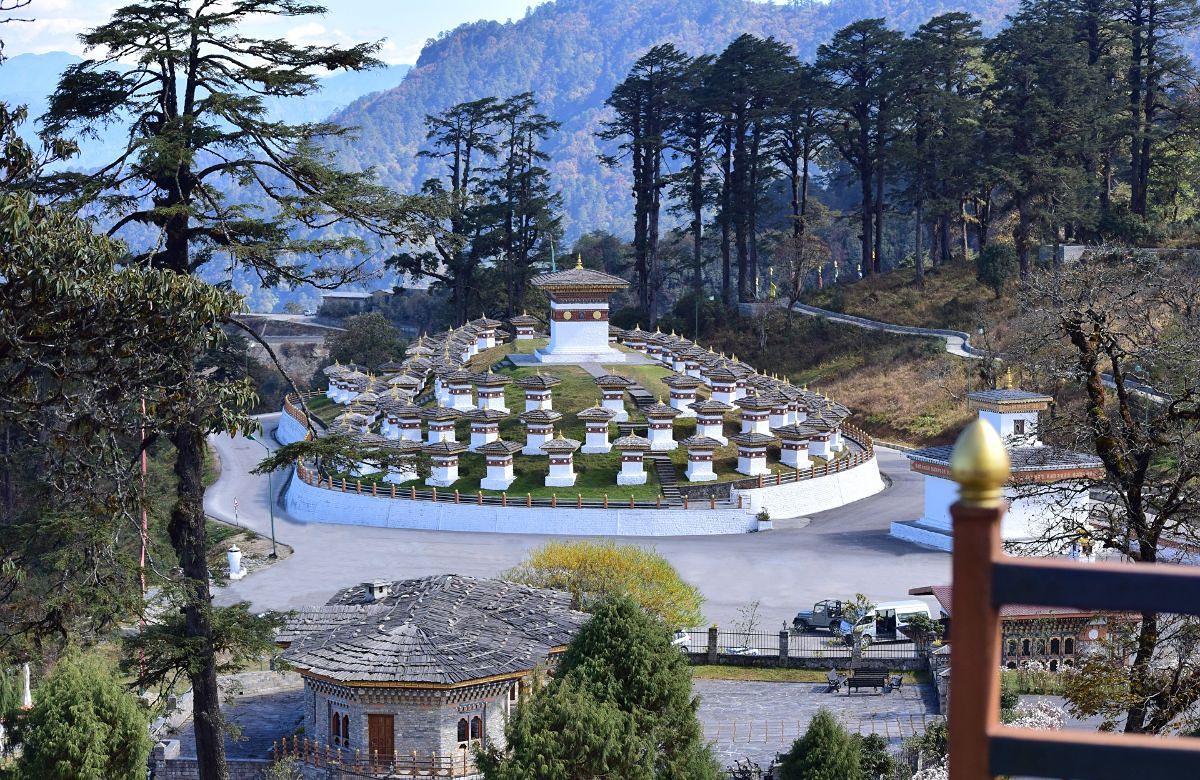
The Druk Wangyal chortens among pine forest at Dochu La

Thimphu and on to Punakha

127 km · 4½ hours Dochu La · 3,100 m

We take Thimphu at a brisk pace — Buddha Dordenma, the Memorial Chorten, a look at Tashichho Dzong from outside — then cross Dochu La in the afternoon and drop into Punakha.

It is a long day, but it puts you two valleys east on day two, which is what makes the rest of the route possible in fourteen days.

Driving: 127 km, about 4½ hours with stops Walking: 2 km in Thimphu Overnight: Punakha (1,250 m)
Day03
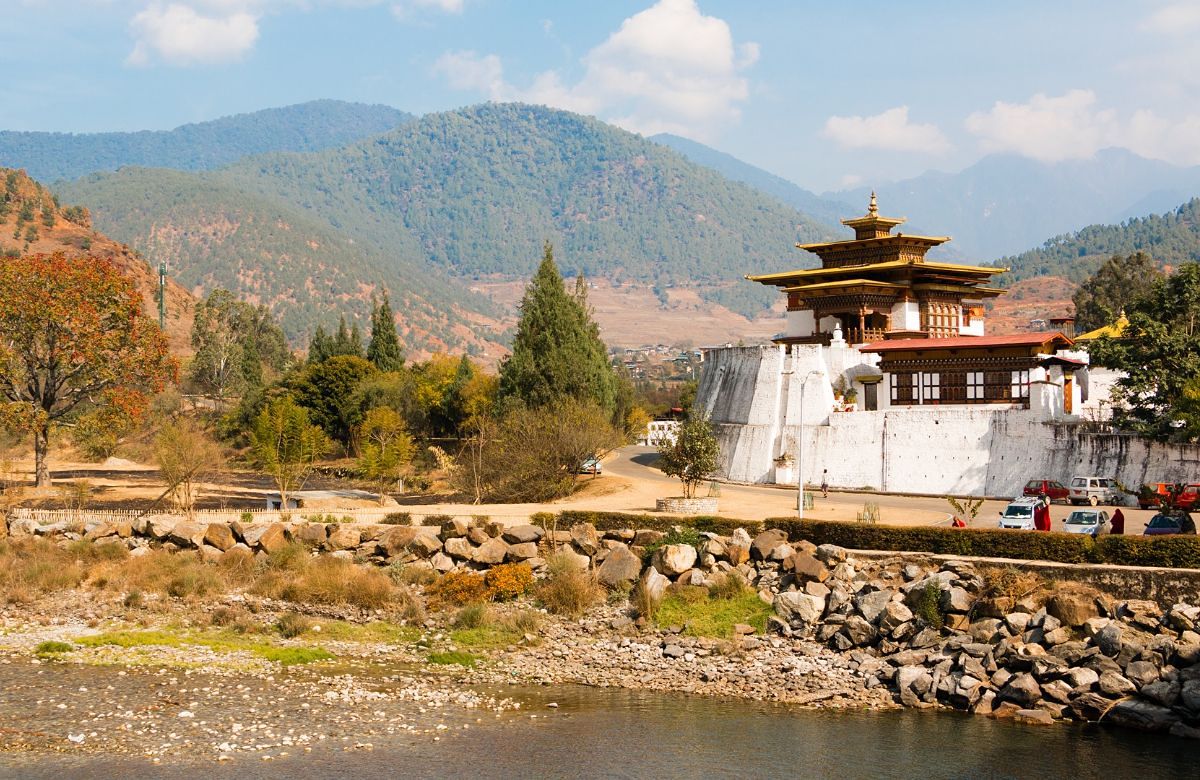
Punakha Dzong seen from the riverbank

Punakha

Punakha Dzong Khamsum Yulley walk

Punakha Dzong in the morning — 1637–38, the second oldest in the country, and the winter seat of the Je Khenpo — then the suspension footbridge over the Po Chhu.

In the afternoon, the walk up to Khamsum Yulley Namgyal Chorten, about forty-five minutes uphill through the rice terraces.

Driving: Short local drives Walking: About 1½ hours Overnight: Punakha (1,250 m)
Day04
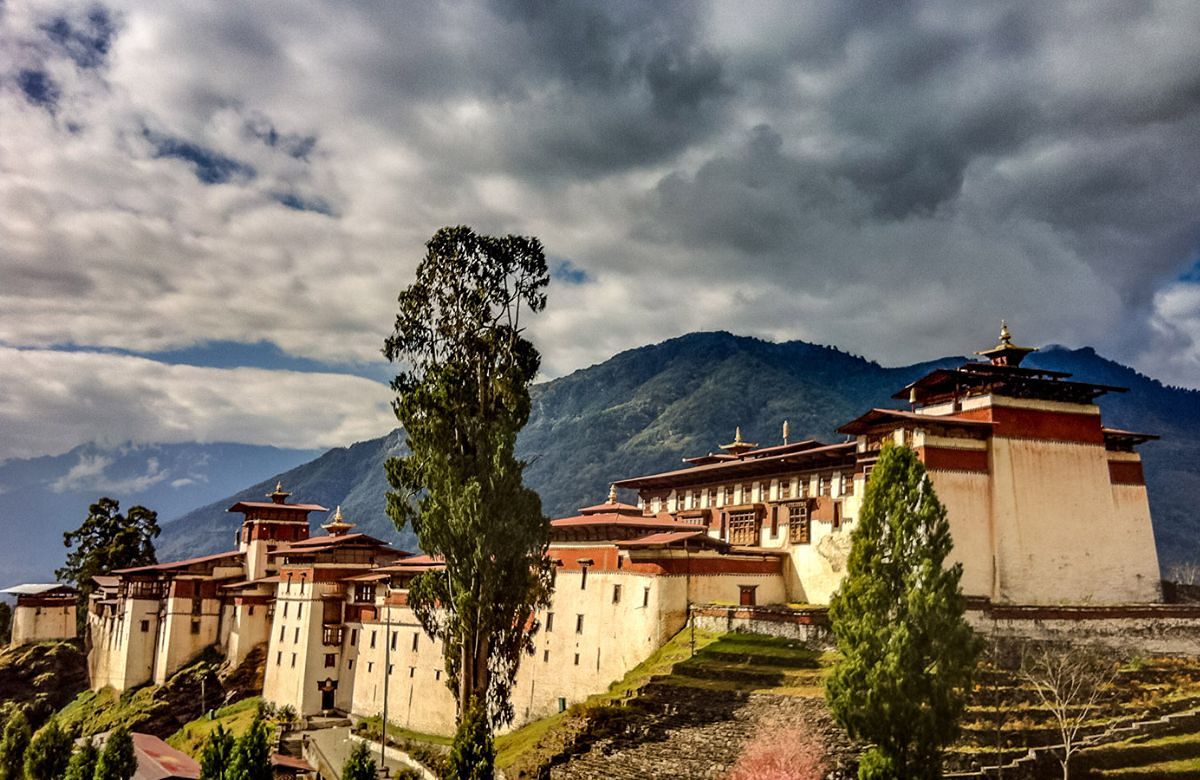
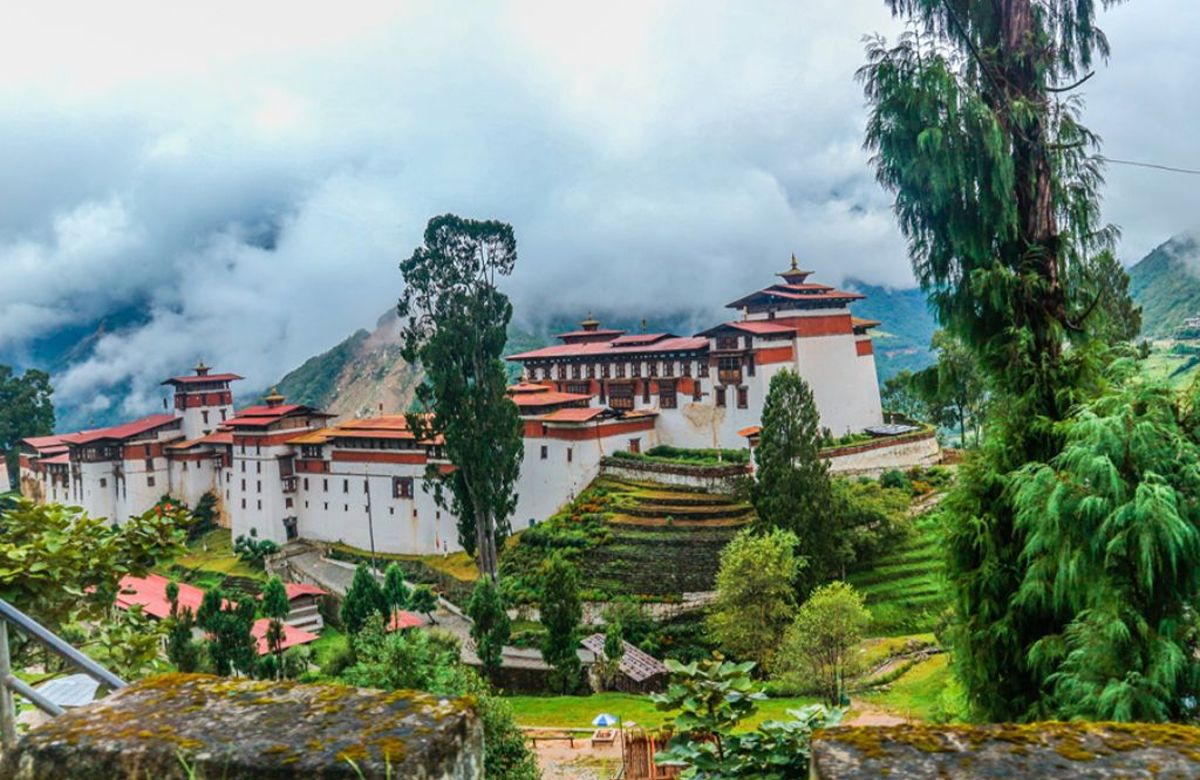
Trongsa Dzong on the hillside above the Mangde valley

Over the Pele La to Trongsa

130 km · 4½–5 hours Pele La · 3,420 m

Past Wangdue Phodrang and up to the Pele La at about 3,420 metres, the divide between western and central Bhutan, then down past Chendebji Chorten to the Mangde Chhu.

Trongsa Dzong, built in 1648, is the largest in Bhutan and controlled the only east–west route through the country. It is the reason the road you are on exists.

Driving: 130 km, about 4½–5 hours Walking: Steps at the dzong Overnight: Trongsa (2,200 m)
Day05
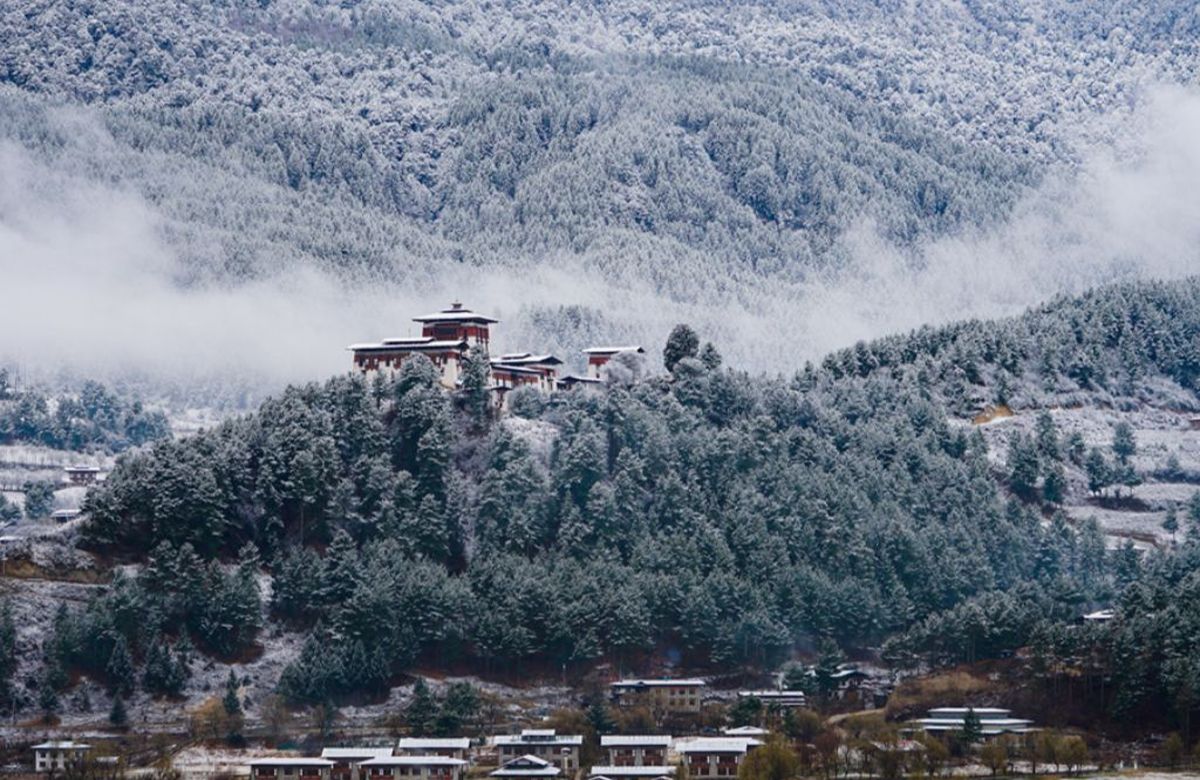
A central Bhutanese dzong under snow

The Yotong La and into Bumthang

68 km · 3 hours Yotong La · 3,425 m

The Tower of Trongsa museum first, in the old watchtower above the dzong, then east over the Yotong La into the Chhume valley and the yathra weaving houses at Zungney.

Jakar in the afternoon, at about 2,600 metres.

Driving: 68 km, about 3 hours Walking: 1–2 km Overnight: Bumthang (2,600 m)
Day06
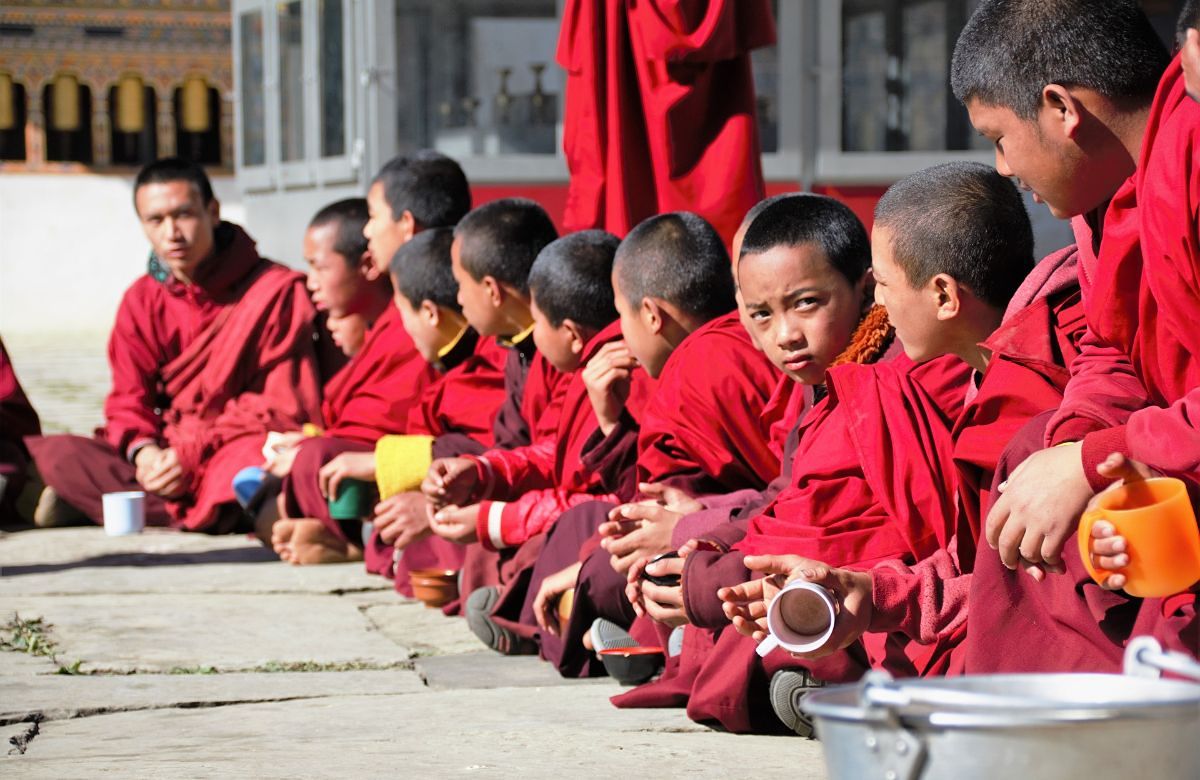
Young monks at a monastery meal in Bumthang

Bumthang — the oldest temples in Bhutan

Jambay Lhakhang Kurjey Tamshing

Jambay Lhakhang, traditionally counted among the seventh-century foundations attributed to Songtsen Gampo; Kurjey Lhakhang, built around a cave holding what is held to be Guru Padmasambhava's body imprint; and Tamshing, founded in 1501 by Pema Lingpa.

Jakar Dzong in the afternoon, and a walk down through the fields. This is the last day before the road turns genuinely remote.

Driving: Short local drives Walking: 3–4 km, gentle Overnight: Bumthang (2,600 m)
Day07
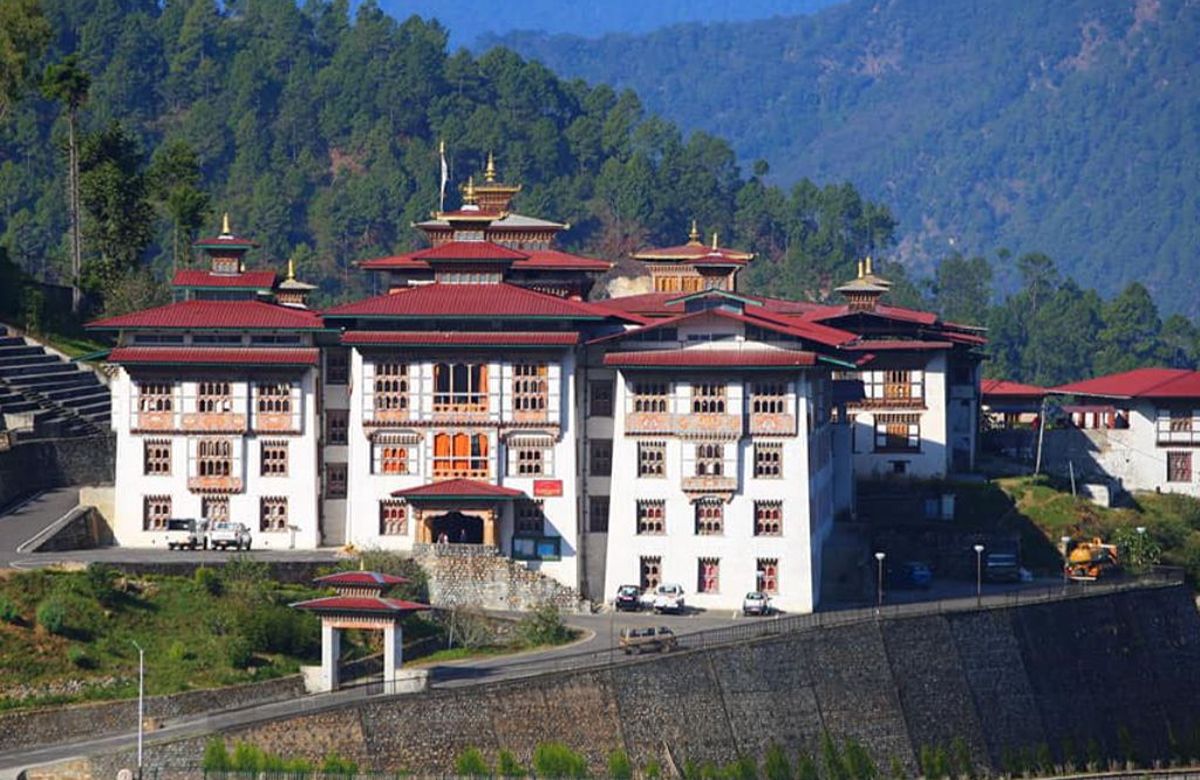
Mongar Dzong in eastern Bhutan

Over the Thrumshing La to Mongar

193 km · 7 hours Thrumshing La · 3,780 m National park

The defining day. The road climbs to the Thrumshing La at about 3,780 metres — the highest pass on Bhutan's road network — through Thrumshing La National Park, then makes one of the most dramatic descents in the Himalaya: roughly 3,200 metres of altitude lost in a single afternoon, through fir, then broadleaf, then sub-tropical scrub, on a road cut into cliff faces above the Kuri Chhu.

Mongar sits at around 1,600 metres. Its dzong is one of the newest in the country, built in the 1930s, and it demonstrates that the traditional techniques are still in use — no nails, no written plans.

Note. This is the longest driving day in any itinerary we run. It cannot be shortened; there is one road.
Driving: 193 km, about 7 hours Walking: Short stops only Overnight: Mongar (1,600 m)
Day08
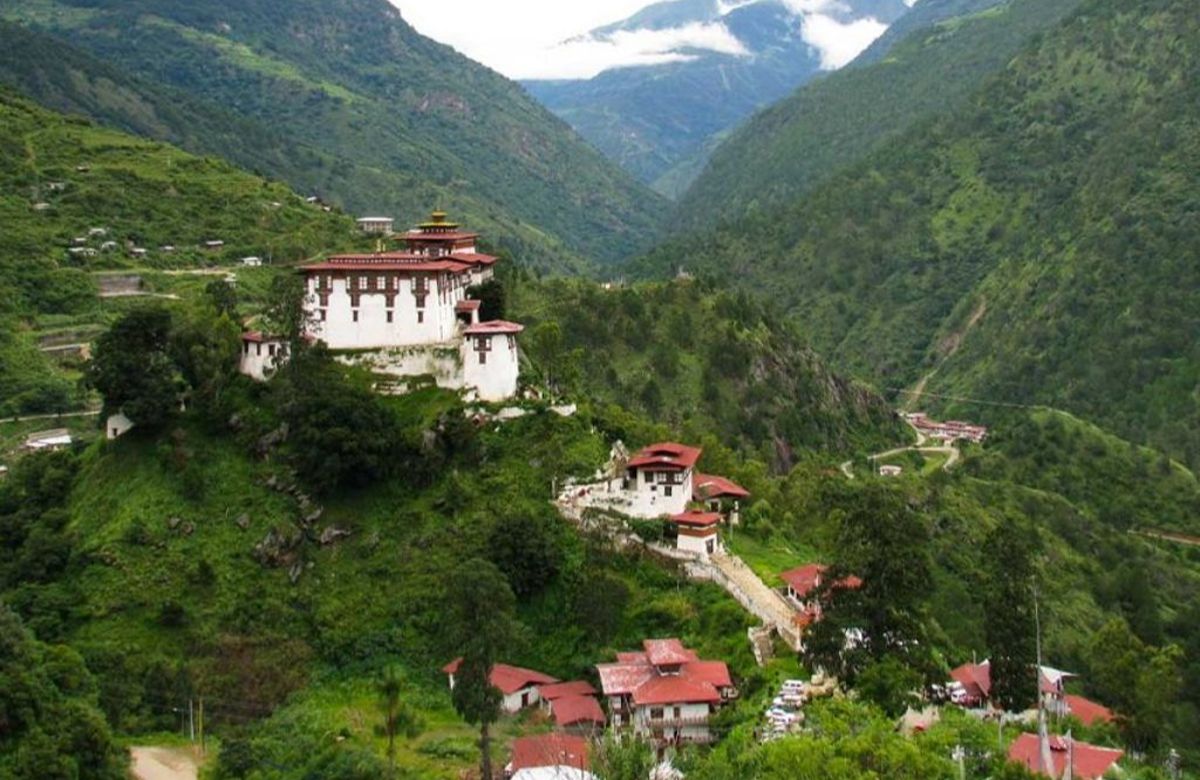
Lhuentse Dzong above the Kuri Chhu

North to Lhuentse and the weavers of Khoma

76 km · 3 hours each way Khoma village Lhuentse Dzong

A day trip north up the Kuri Chhu into Lhuentse — the ancestral home of the royal family and the most isolated dzongkhag in Bhutan. Lhuentse Dzong, built in 1654, stands on a bluff above the river with almost nothing around it.

Khoma village is the reason to come. Nearly every household here weaves kishuthara, the silk brocade kira that is the most valued textile in the country; an intricate piece can occupy a weaver for the better part of a year. You will be invited to sit and watch, and you should.

Driving: About 6 hours of driving in total Walking: Village walking, some steep lanes Overnight: Mongar (1,600 m)
Day09
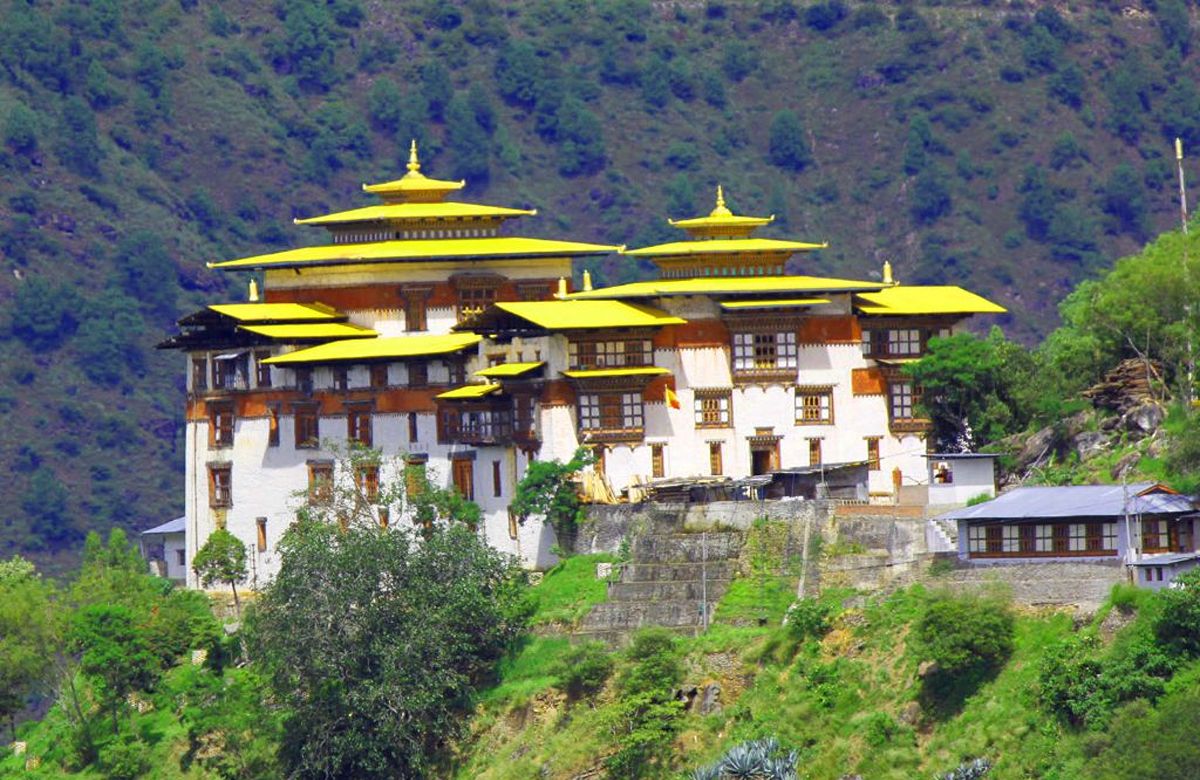
Trashigang Dzong above the Drangme Chhu

East to Trashigang

92 km · 3½ hours Kori La · 2,450 m

Over the Kori La at about 2,450 metres, past the chorten at the top and down through Yadi's long series of switchbacks to the Drangme Chhu.

Trashigang is the largest dzongkhag in Bhutan and the commercial centre of the east. Its dzong, founded in 1659, hangs above the river on a spur so narrow the buildings seem to be holding on. The town below it is a single sloping street where everyone eventually passes through.

Driving: 92 km, about 3½ hours Walking: Steps at the dzong Overnight: Trashigang (1,100 m)
Day10
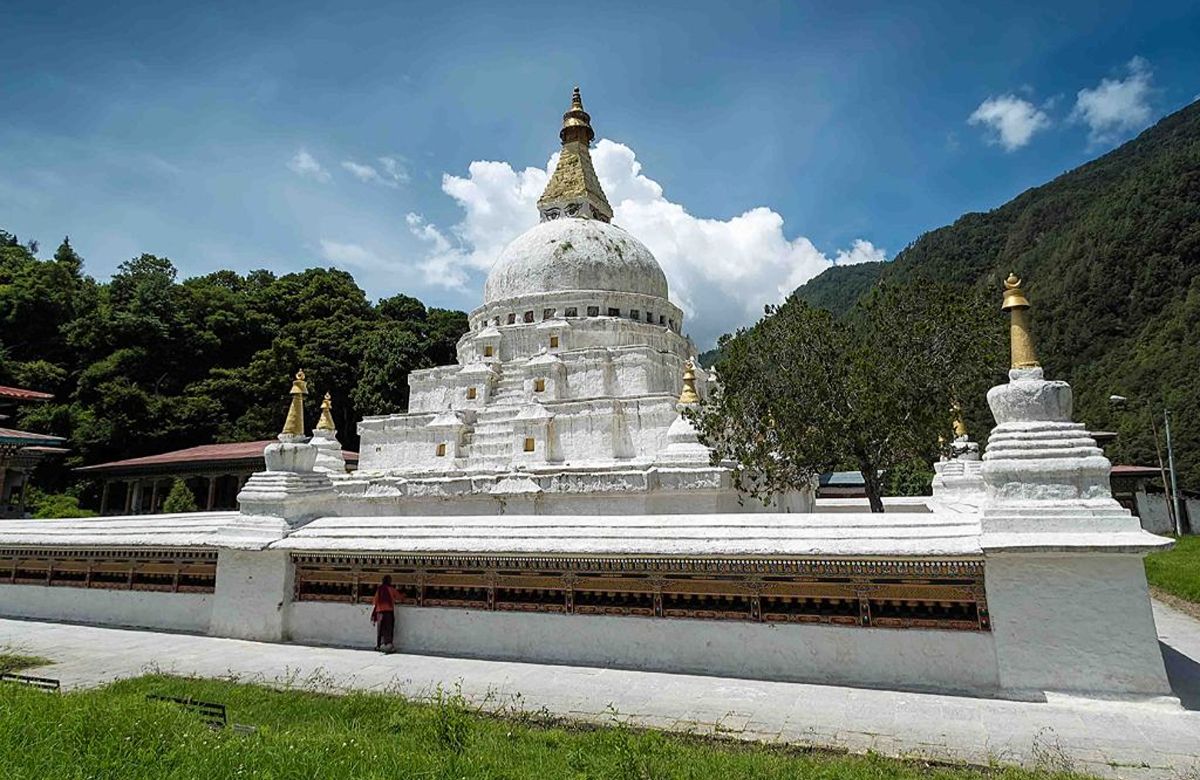
The white dome of Chorten Kora at Trashiyangtse

Trashiyangtse, Chorten Kora and Gom Kora

Chorten Kora Gom Kora 3 hours return

North to Gom Kora, a small temple beside the river built around a black rock where Guru Padmasambhava is said to have meditated, and then to Trashiyangtse.

Chorten Kora, completed in 1740, is modelled on Boudhanath in Kathmandu — a white dome beside the Kulong Chhu that draws pilgrims from Bhutan and Arunachal Pradesh. Trashiyangtse is also where wooden bowls and containers are turned; the craft school in the town teaches the thirteen traditional arts.

Driving: About 3 hours return Walking: 1–2 km Overnight: Trashigang (1,100 m)
Day11
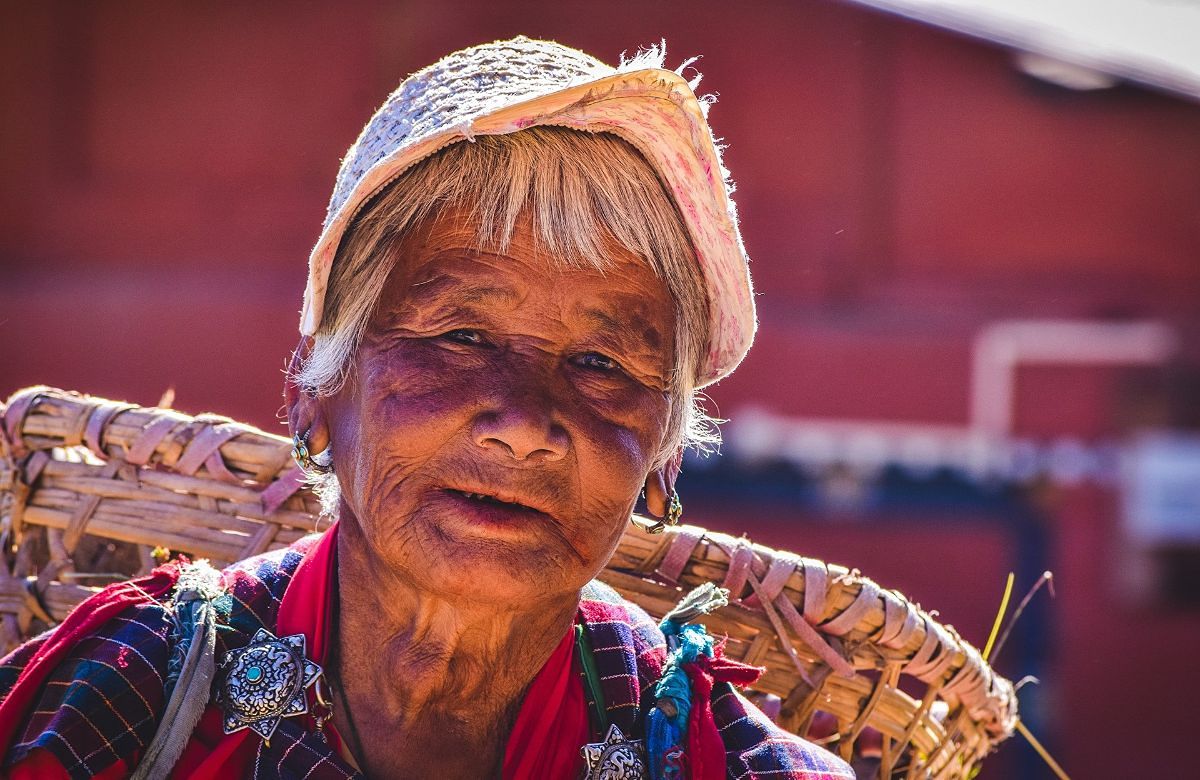
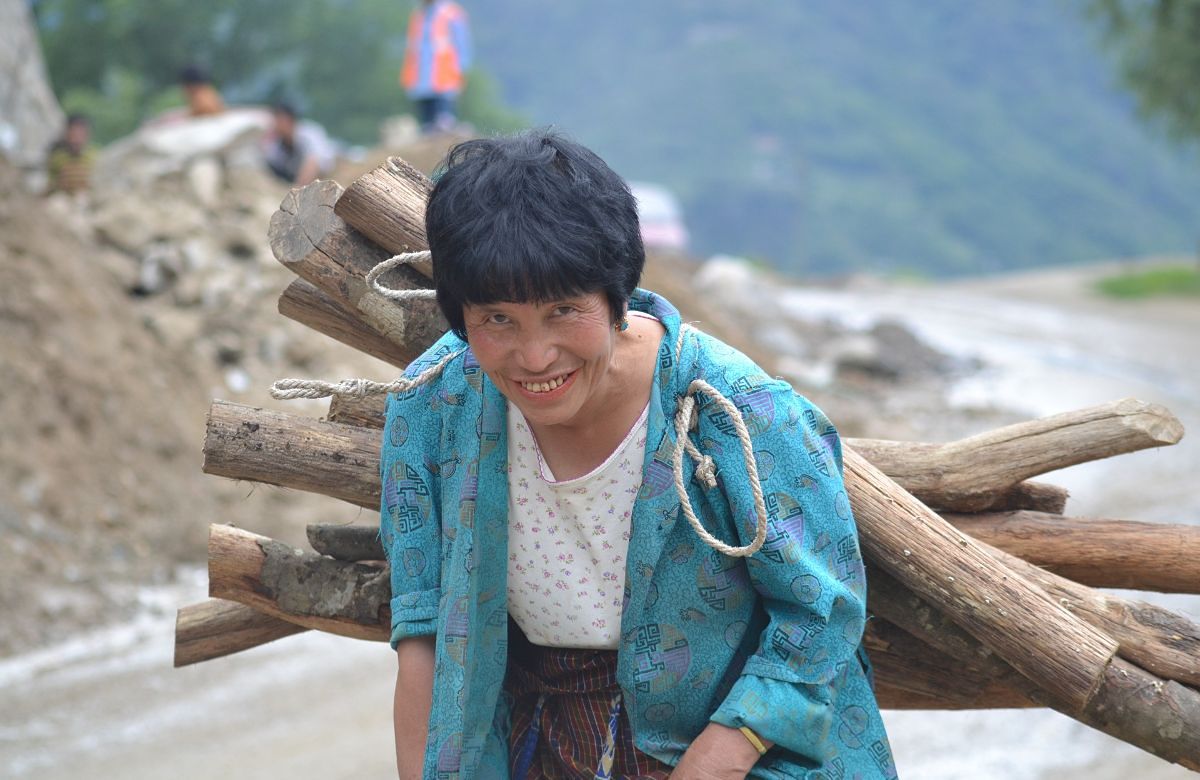
A Bhutanese woman carrying a woven basket

Radhi, Rangjung and the eastern villages

Radhi weaving Rangjung Woesel Choling

Radhi is known across Bhutan for bura, raw silk woven on backstrap looms, and the village works at it in the open. Rangjung, nearby, has a large and active monastery founded in the late 1970s.

This is a day for going slowly and talking to people, which is what the east is for. Your guide will find you a household to sit in.

Driving: Short local drives Walking: 2–3 km of village walking Overnight: Trashigang (1,100 m)
Day12
An aircraft in flight against a clear sky

Fly Yonphula to Paro

Yonphula airstrip Domestic flight

Yonphula is about an hour above Trashigang on a ridge at roughly 2,500 metres. The flight to Paro takes a little over an hour and gives you back the two and a half days the drive would have cost.

Afternoon in Paro — Rinpung Dzong, built in 1644, and the National Museum in the watchtower above it.

Note. Yonphula is weather-dependent and cancellations happen. We hold a road contingency, which adds two days to the itinerary.
Driving: 1 hour to the airstrip, then a 1-hour flight Walking: 1–2 km in Paro Overnight: Paro (2,200 m)
Day13
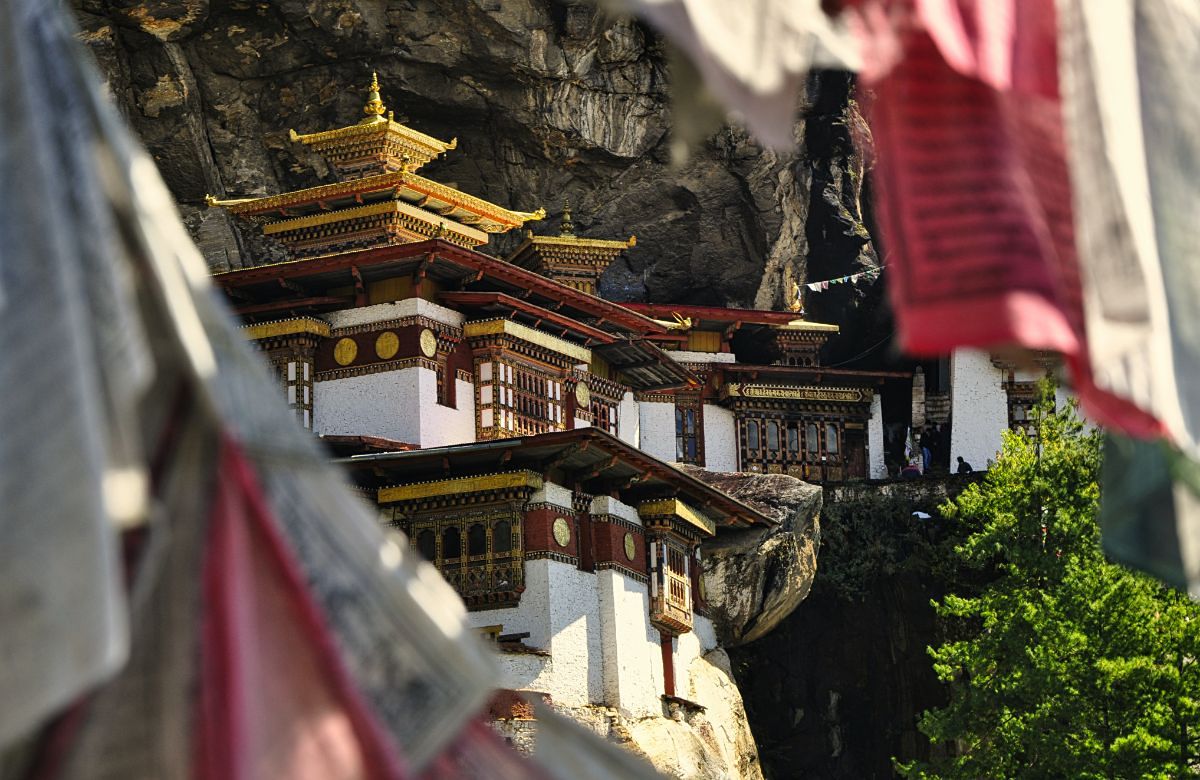
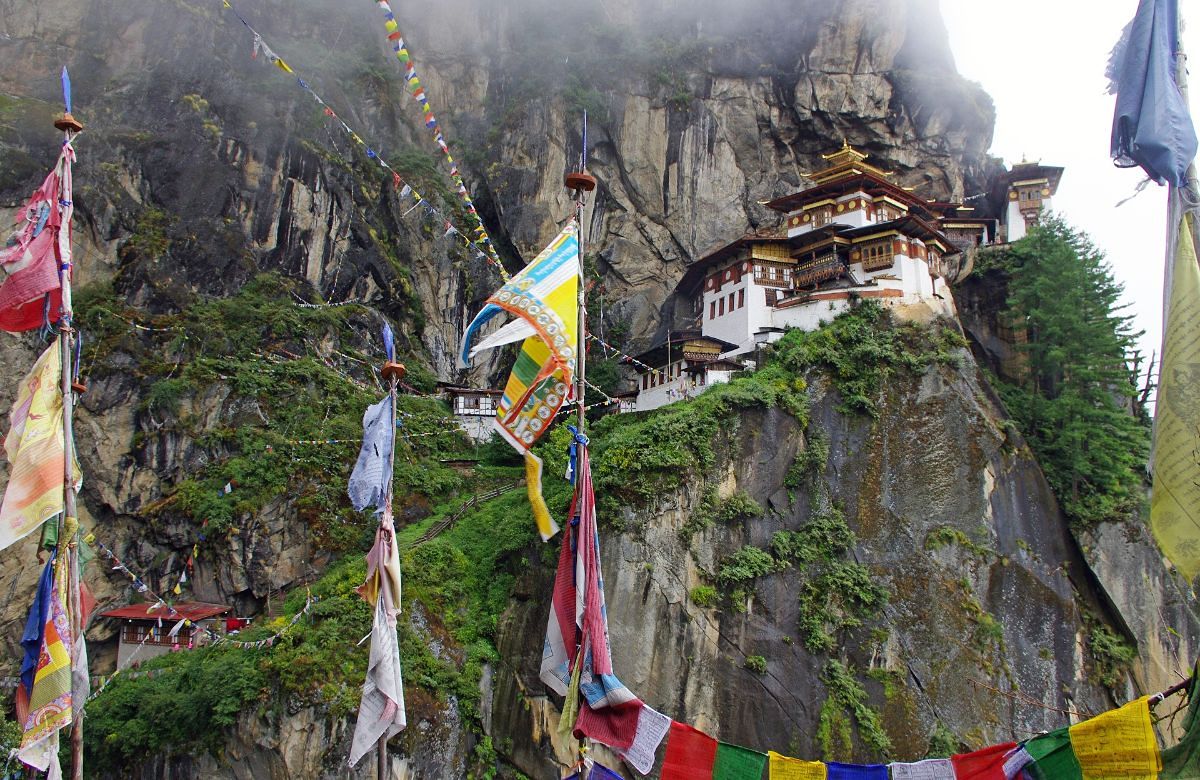
Prayer flags on the cliff below Paro Taktsang

Paro Taktsang

4–5 hours return About 900 m of ascent

The climb to Taktsang, four to five hours return with roughly 900 metres of ascent, finishing at the monastery at around 3,120 metres. Built in 1692 around Guru Padmasambhava's meditation cave, damaged by fire in 1998 and rebuilt.

It is an odd and rather good way to end this particular journey — the most photographed place in Bhutan, after two weeks in places that are not photographed at all.

Driving: Short transfer to the trailhead Walking: 4–5 hours return, sustained climb Overnight: Paro (2,200 m)
Day14
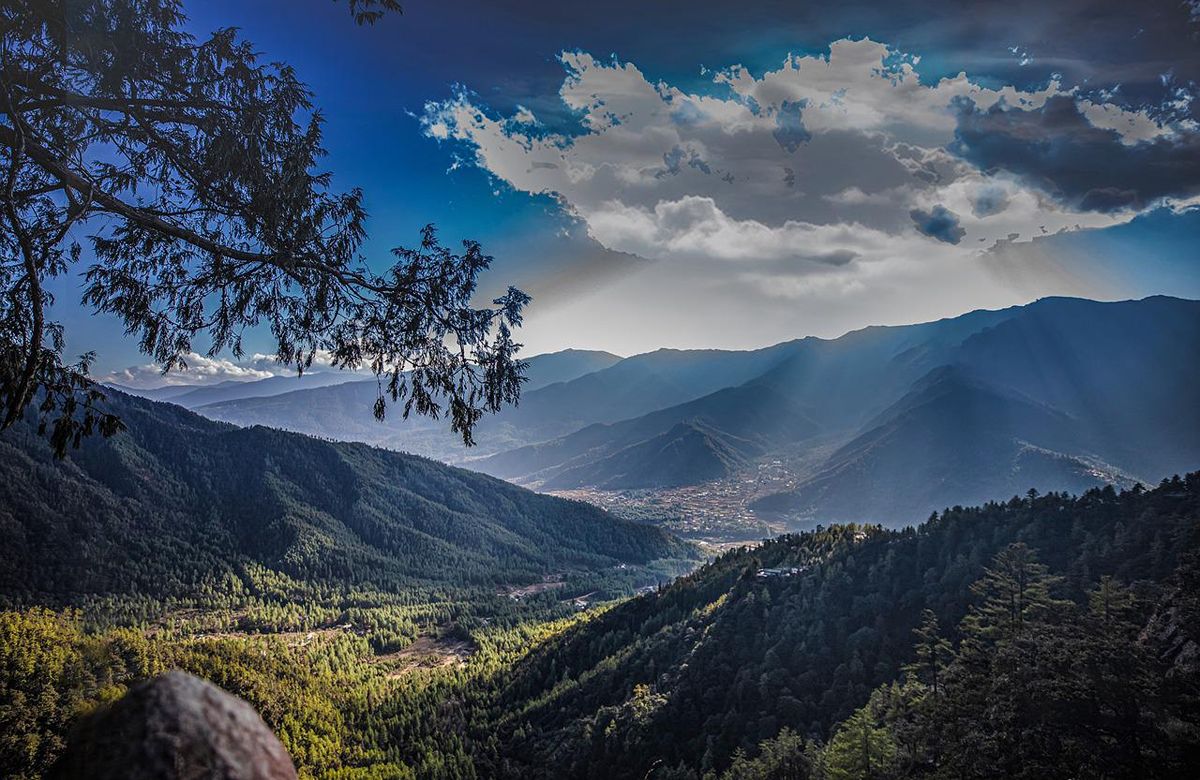
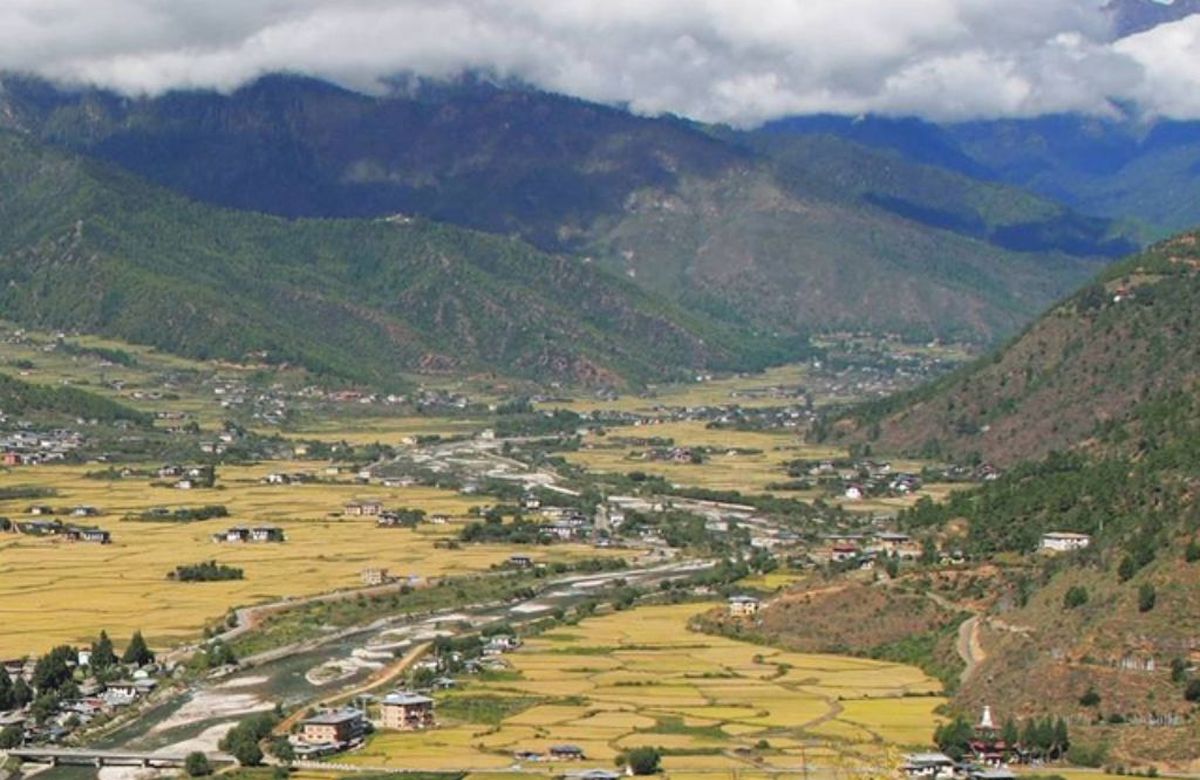
Forested ridges above a Bhutanese valley

Departure from Paro

Transfer to the airport

Transfer to Paro International for your flight home.

Driving: 15 minutes to the airport
Altitude

What the route does to your elevation

Altitude range on this journey is 1,100–3,780 m. Sleeping heights matter more than the passes you drive over — see travel questions on altitude.

1,000 m2,000 m3,000 m4,000 m Paro2,235 mDochu La3,100 mPunakha1,250 mPele La3,420 mTrongsa2,200 mBumthang2,600 mThrumshing La3,780 mMongar1,600 mLhuentse1,400 mKori La2,450 mTrashigang1,100 mParo2,235 mDAY 1DAY 2DAY 3DAY 4DAY 5DAY 6DAY 7DAY 8DAY 9DAY 10DAY 11DAY 12
The quotation

What is included, and what is not

One figure covers everything on the left, the Sustainable Development Fee and the visa fee included. There are no compulsory extras added later.

Included in the quotation

  • All accommodation in Bhutan on a twin-sharing basis
  • All meals through the itinerary — breakfast, lunch and dinner
  • A licensed English-speaking Bhutanese guide throughout
  • Private vehicle and driver for the full itinerary
  • The Sustainable Development Fee for every night of the trip
  • Bhutan visa processing and the US$40 government visa fee
  • All monument, museum and dzong entry fees on the itinerary
  • Bottled water in the vehicle each day
  • A local SIM card on arrival

Not included

  • International flights to and from Paro
  • Travel insurance — strongly recommended, and your own arrangement
  • Single-room supplement, if you would prefer not to share
  • Drinks other than those served with meals
  • Laundry, telephone calls and other personal spending
  • Tips for your guide and driver, which are at your discretion

Important notes

  • Driving times are realistic estimates for Bhutanese mountain roads and assume normal conditions. Roadworks and weather can add to them, particularly during the monsoon.
  • Specific hotels are subject to availability and are confirmed at the time of booking.
  • Mountain views cannot be guaranteed. They depend entirely on the weather on the day.
  • The Sustainable Development Fee is set by the Royal Government of Bhutan and is included in every quotation we send.
  • Hotels east of Bumthang are simple and comfortable rather than smart. In Lhuentse and Trashiyangtse the choice is limited to a handful of guesthouses.
  • The return uses the domestic flight from Yonphula, near Trashigang, to Paro. That airstrip is weather-dependent and flights are occasionally cancelled — we always hold a road contingency, which adds two days. Alternatively the journey can exit south to Guwahati in India via Samdrup Jongkhar, which requires an Indian visa arranged in advance.
  • This is a driving itinerary. Several days exceed five hours on mountain roads.
Questions

Before you enquire

How rough is the road east?
The lateral road has been widened and surfaced in stages and most of it is now good. Sections still deteriorate after monsoon landslides, particularly on the long descent from the Thrumshing La to Mongar. Delays of an hour or two are normal in July and August; outside the monsoon it is generally straightforward.
Why fly out rather than drive back?
Because driving Trashigang to Paro is two and a half days of the same road you have just covered. The domestic flight from Yonphula takes about an hour and gives you those days back. It is weather-dependent, so we plan for the possibility that it does not go.
Is the weaving really worth the distance?
Khoma, in Lhuentse, is where kishuthara is woven — a silk brocade kira so intricate that a single piece can take a weaver the better part of a year. Almost every household in the village weaves. Whether that justifies four days of driving is a personal question, but nobody who cares about textiles has regretted it.
Do I have to book through a tour operator to get a visa?
No. Travellers may apply directly through Bhutan's official online system, or have a tour operator or hotel apply on their behalf. The visa fee is US$40 per person, one-off and non-refundable. If you book this journey with us we handle the application as part of the arrangements.
What are the hotels like?
We book comfortable, well-run hotels chosen for location and service rather than for a star rating. If you would prefer a particular property, or a higher grade of hotel, tell us in your enquiry and we will quote it. Specific hotels are confirmed at the time of booking and are subject to availability.
Can the itinerary be changed?
Yes. Every departure is private, so the route, the pace and the number of nights in each place are all adjustable. Tell us roughly what you want and we will send a revised plan with the quotation.

More general questions are answered on travel questions.

The Eastern Road

Send Inquiry & Get a Quotation

We do not publish prices, because a private trip priced honestly depends on your dates, your group and the hotels you want. Tell us those three things and you will have a real figure.

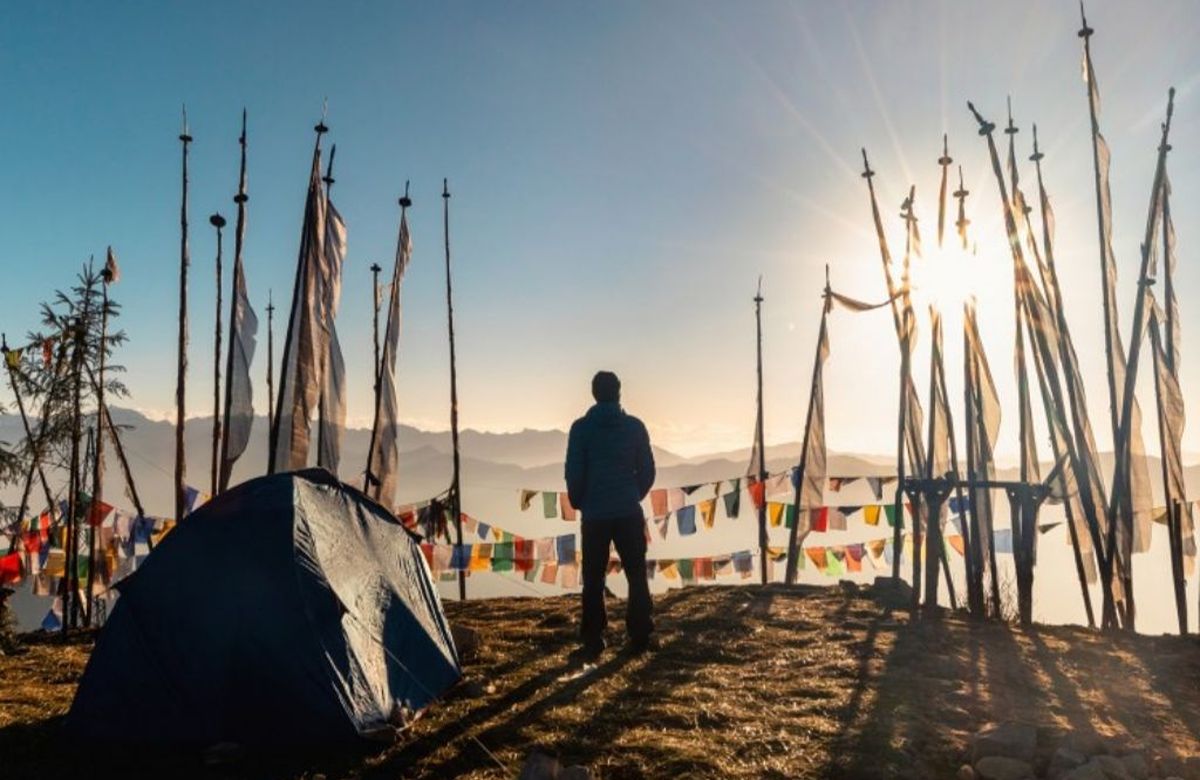
A guide standing among tall prayer-flag poles on a Bhutanese ridge
Talk to us

We answer every enquiry ourselves

No call centre and no automated quote. A person in our Thimphu office reads what you have written and replies with a plan built around it.

Enquiry

Enquire about The Eastern Road

Private departure on any date you choose. We reply with a written itinerary and a full quotation.

Selected Value: 0
Duration
Accommodation